
Disputes & Litigation
Why You Should Not Delete Messages During a Dispute
Written by Justin Yap, Partner
Last reviewed 9 June 2026 · 5 min read
On this page
When a dispute starts, many people feel tempted to delete messages that look awkward, emotional, incomplete, or damaging. It may be a WhatsApp exchange sent in anger, an email that was badly worded, a message admitting delay, or a conversation that does not show the full picture.
That instinct is understandable, but it is dangerous.
Deleting messages rarely solves the problem. In a legal dispute, it can create a much bigger issue than the original message itself. A message can often be explained by context. An attempt to remove evidence is harder to explain.
Once a dispute is active, or even reasonably anticipated, the safer approach is to preserve the full record and let your lawyer assess how the material should be handled.
Messages can become important evidence
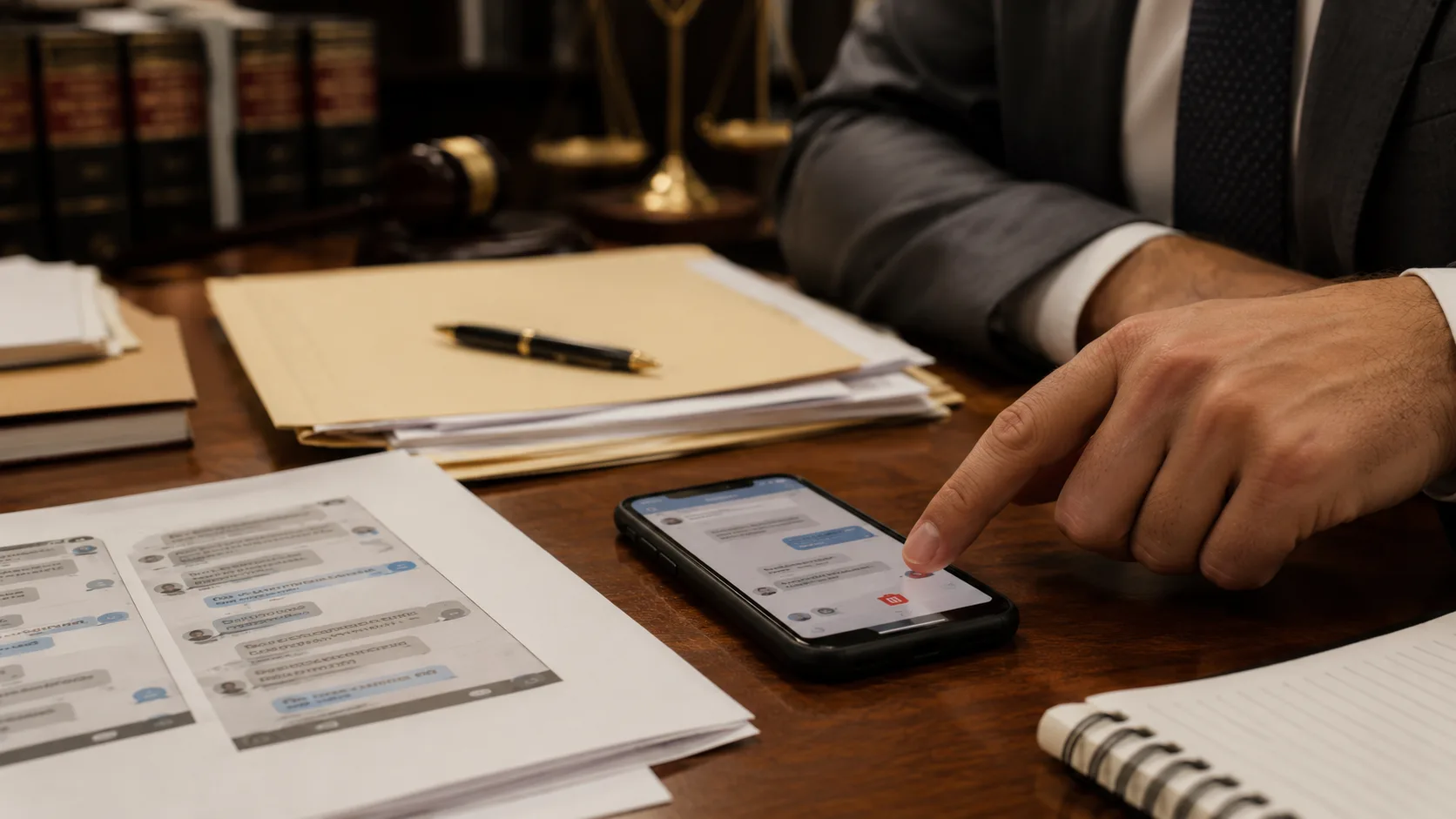
In modern disputes, much of the evidence is no longer found only in signed contracts and formal letters. It is often found in WhatsApp messages, emails, Telegram chats, screenshots, voice notes, and other digital communications.
These records may show what was agreed, who gave instructions, when payment was promised, whether a complaint was raised, whether goods or services were accepted, or whether one party admitted a particular fact. In commercial matters, messages may also explain the background to invoices, quotations, approvals, delivery, delay, defects, settlement discussions, or variation of terms.
This means that messages can support a claim or defence even if there is no formal signed document. They may also help lawyers understand the chronology of the dispute and assess whether the other party's version is accurate.
For that reason, deleting messages once a dispute has started can damage the very record that may be needed to prove your position.
Deleting can create an adverse inference
Under section 114(g) of the Evidence Act 1950, the court may presume that evidence which could be produced but is not produced would, if produced, be unfavourable to the person who withholds it.
In practical terms, if a party deletes or withholds relevant material, the other side may argue that the missing material was removed because it was damaging. The court does not automatically accept that argument in every case, but the risk is real where the circumstances suggest that relevant evidence was deliberately destroyed or suppressed.
This is why deleting a message can be worse than keeping it. The original message may have had context. It may have been explainable. It may not have been as damaging as you thought. But once it is deleted, the issue may shift from the content of the message to your conduct in removing it.
A court may then be asked to draw conclusions against you based on the absence of the evidence.
It damages credibility
Credibility matters in disputes. Even where a claim or defence has merit, the way a party behaves after the dispute begins can affect how the case is viewed.
If it later emerges that messages were deleted after a letter of demand was received, after lawyers became involved, or after court proceedings were threatened, the other side will likely use that fact to attack your credibility. They may say that you were trying to hide the truth, control the record, or prevent the full facts from being seen.
This can affect more than the deleted message. Once credibility is damaged on one issue, the other side may try to use it against your whole version of events.
A difficult message can often be managed. A pattern of deleting, altering, or selectively producing messages is harder to defend. It gives the other side a separate point to use against you, even if the original dispute was about something else entirely.
Deletion may not remove the message
Another practical problem is that deleting a message from your own phone does not mean the message has disappeared.
The other party may still have the conversation. The message may exist in backups, exported chats, screenshots, linked devices, cloud storage, email forwarding, company records, or another person's phone. In business disputes, the same conversation may have been forwarded internally or discussed with others before deletion.
This means deletion may achieve very little. Instead of removing the risk, it may create a record gap on your side while the other party still has the material.
That is a weak position to be in. If the other side later produces the deleted message, you may have to explain both the message and the decision to delete it.
Full conversations are usually better than selected screenshots
Many people preserve only the parts of the conversation that help them. This is risky because selected screenshots may look incomplete or misleading.
A single message can mean different things depending on what came before and after it. For example, a message saying "I will pay" may appear to admit a debt, but the surrounding conversation may show that the amount was disputed, that payment was conditional, or that the statement was made as part of a settlement discussion. Similarly, an angry message may look damaging on its own, but the full conversation may explain what triggered it.
For legal advice, full context is important. Your lawyer needs to see the helpful and unhelpful parts so that the case can be assessed honestly. If only selected fragments are shown, the advice may be incomplete.
A complete record also reduces the risk that the other side later produces missing parts and changes the meaning of the conversation.
Preserve evidence once a dispute is reasonably anticipated
You do not need to wait until a court case is filed before preserving evidence. If a dispute has already arisen, if payment is being refused, if a legal letter has been sent, if allegations are being made, or if court action is reasonably possible, you should start preserving relevant material.
This includes messages, emails, attachments, invoices, payment records, contracts, photographs, videos, screenshots, call logs, delivery documents, meeting notes, and any other records connected to the dispute.
Preserving evidence does not mean that every document will eventually be used. It simply means that the material remains available for proper review. Your lawyer can later decide what is relevant, what is privileged, what should be disclosed, and how difficult material should be addressed.
The important point is that you should not make that decision by deleting material yourself.
Do not edit, crop, or alter records
Deleting is not the only problem. Editing screenshots, cropping out context, renaming files in a misleading way, changing dates, deleting parts of a conversation, or presenting altered records can also create serious credibility issues.
If you need to preserve WhatsApp messages, keep the full chat where possible. Export the conversation if necessary. Take screenshots that show the date, time, sender, and surrounding context. Keep the original device and backup where available. For emails, preserve the full email chain and attachments, not only the portion that looks helpful.
In commercial disputes, it is also useful to keep the documents in an organised folder with a simple chronology. This helps your lawyer understand what happened and identify the evidence supporting each stage of the dispute.
The goal is not to make the evidence look perfect. The goal is to preserve it honestly.
Tell your lawyer about awkward material
If there is a message that worries you, the answer is not to delete it. The proper step is to tell your lawyer about it.
Awkward material can often be managed. A message may have been sent in frustration, based on incomplete information, during settlement discussions, or before the full facts were known. There may also be surrounding context that reduces its impact.
Your lawyer can only advise properly if the full picture is known. Hiding difficult material from your own lawyer can lead to bad strategy, because the other side may produce that same material later. When that happens, the case may be damaged not only by the document itself, but also by the fact that it was not addressed earlier.
Honest instructions allow the weak points to be assessed before the other side uses them.
What should you do instead?
If a dispute has started, preserve the full record and avoid further emotional communication. Do not delete, edit, or selectively produce messages. Do not post about the dispute publicly. Do not threaten the other party. Do not create new documents to repair the situation after the fact.
Instead, collect the relevant material, prepare a short factual timeline, and seek legal advice before responding further. If you need to continue communicating with the other party, keep the messages calm, accurate, and limited to what is necessary.
The way you behave after a dispute begins can become part of the case. A controlled response protects your position better than a rushed attempt to remove inconvenient material.
Key takeaways
Deleting messages during a dispute can create legal and practical problems. It may expose you to arguments about adverse inference, damage your credibility, and leave you in a weaker position if the other side still has the messages.
The better approach is to preserve the full record, including material that may appear unhelpful, and let your lawyer deal with it properly. In many cases, an awkward message can be explained. An attempt to delete evidence is much harder to justify.
Frequently Asked Questions
What happens if I delete messages during a dispute?
If relevant messages are deleted, the other side may argue that the evidence was withheld because it was unfavourable to you. Depending on the facts, the court may be asked to draw an adverse inference under section 114(g) of the Evidence Act 1950. Deletion may also damage your credibility, especially if it happened after the dispute had already started.
Should I delete embarrassing messages before they are used against me?
No. Deleting them may create a bigger problem. If a message is embarrassing or looks damaging, preserve it and show it to your lawyer. The message may have context, and your lawyer may be able to deal with it in a controlled way. Trying to remove it can make the situation worse.
When should I start preserving evidence?
You should start preserving evidence as soon as a dispute is reasonably anticipated. This may be when payment is refused, allegations are made, lawyers become involved, a letter of demand is received, or legal action appears possible. From that point, relevant messages, documents, and records should be preserved.
Speak to JPP LAW
Justin, Poh & Partners, also known as JPP LAW, assists clients with civil and commercial disputes, debt recovery, contractual claims, company disputes, settlement negotiations, injunctions, enforcement, and court proceedings in Malaysia. If you are considering legal action and need to assess your position before filing a claim, you may contact us to discuss the matter.
Disclaimer: This article is for general information only and does not constitute legal advice. You should seek advice based on your specific facts and documents.
Your next step
Have a question about your own matter?
Speak directly with a partner about your situation. We will help you understand where you stand and what your options are, with no obligation.
Speak to a PartnerMore in Disputes & Litigation
Defamation vs Libel vs Slander in Malaysia: What's the Difference?
Defamation vs libel vs slander in Malaysia: learn the difference, what you must prove, online defamation rules, key defences, damages and time limits.
Read→My Tenant Stopped Paying Rent in Malaysia: What Can a Landlord Do?
Tenant stopped paying rent in Malaysia? Learn how landlords can recover arrears, use a writ of distress, regain possession and claim double rent lawfully.
Read→Bankruptcy in Malaysia: What You Can and Cannot Do After the Order
Declared bankrupt in Malaysia? Learn what happens to your property, whether you can work, travel, run a business, use a bank account and what you must do next.
Read→