
Disputes & Litigation
Can Social Media Posts Become Evidence in Malaysia?
Written by Justin Yap, Partner
Last reviewed 9 June 2026 · 6 min read
On this page
Social media often feels informal. A post may be written in frustration, a comment may be made casually, and a story may disappear after 24 hours. However, in a legal dispute, online content can become far more serious than it seemed at the time it was posted.
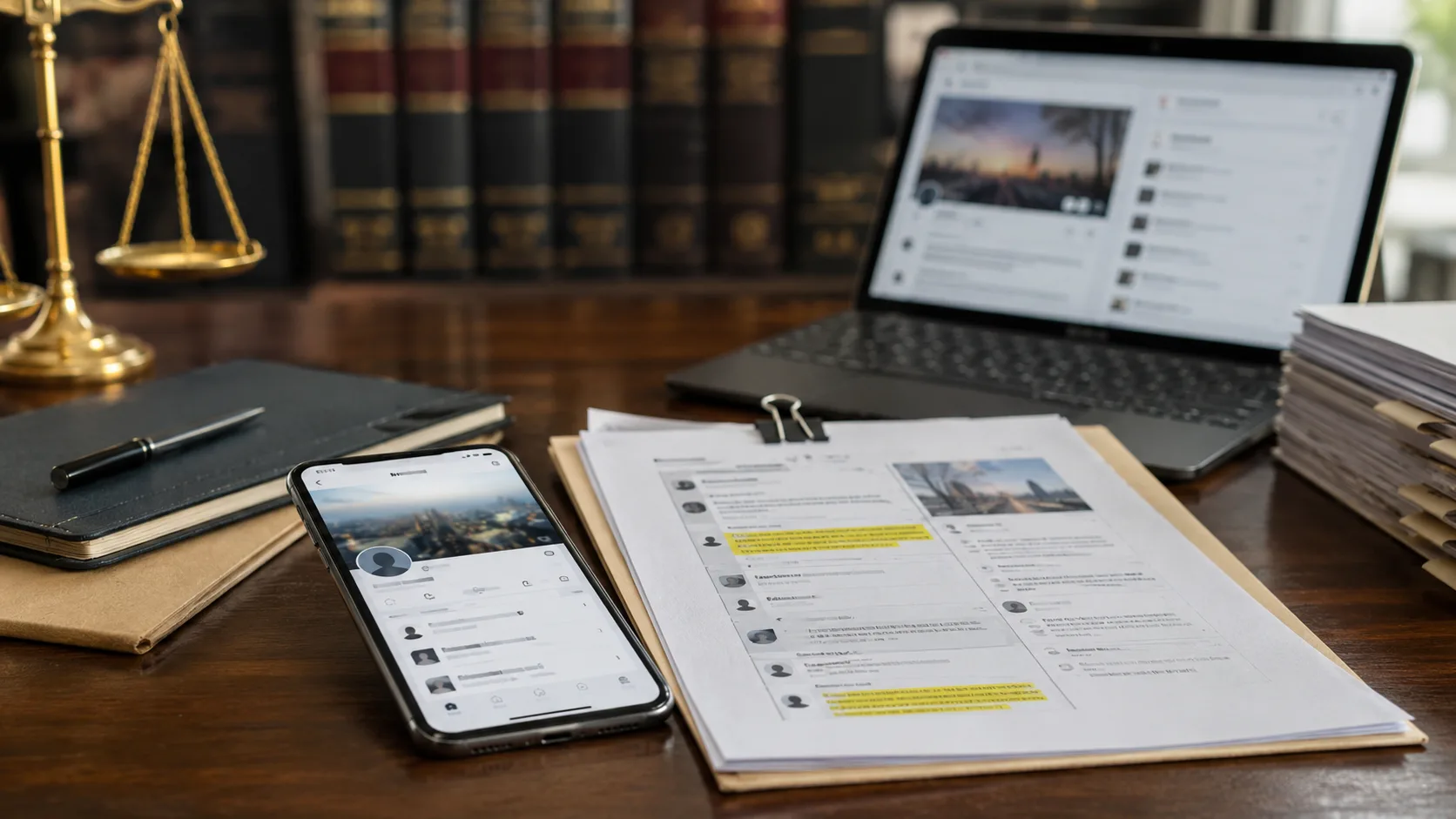
In Malaysia, social media posts, comments, stories, screenshots, direct messages, videos, and other online records may become evidence if they are relevant to the dispute and can be properly proved. The issue is not only whether something was posted, but what it shows, who posted it, when it was posted, whether it has been preserved properly, and whether it supports or contradicts the position taken in the case.
This matters because many civil and commercial disputes now involve online conduct. A Facebook post may support a defamation claim. An Instagram story may contradict a person's version of events. A LinkedIn post may show how a business represented itself to the public. A WhatsApp screenshot shared on social media may become relevant to a dispute about reputation, confidentiality, debt, employment, ownership, or business dealings.
The practical lesson is simple. If you are involved in a dispute, assume that what you post online may later be read by lawyers, the other party, or the court.
Social media content can become evidence
Social media content is a form of electronic record. In legal proceedings, electronic records may be treated as documents and may be admitted if the legal requirements for admissibility and proof are satisfied.
Under section 90A of the Evidence Act 1950, documents produced by a computer may be admissible if produced in the course of the ordinary use of that computer. In practical terms, this is one of the legal provisions commonly considered where parties seek to rely on digital or computer-generated material.
This does not mean every screenshot will automatically be accepted without question. The party relying on the content may still need to deal with issues such as relevance, authenticity, completeness, context, and how the material was obtained or preserved. The other side may challenge whether the post is genuine, whether the screenshot has been edited, whether the account belongs to the alleged person, or whether the content has been taken out of context.
The key point is that social media content should not be dismissed as "just online talk." If it is relevant and properly proven, it may form part of the evidence.
Privacy settings do not make a post risk-free
Some people assume that a private account or limited audience makes a post legally safe. That is a dangerous assumption.
Privacy settings may affect who can view the content directly, but they do not guarantee that the content will remain private forever. Someone who can view the post may take a screenshot, forward it, save it, or produce it later. The content may also exist in backups, shared chats, tagged posts, linked accounts, or devices belonging to other people.
In a dispute, the question is not whether the post was meant to be private. The question is whether the content is relevant and whether it can be properly placed before the court or used in negotiations. If the content supports an allegation, contradicts a party's position, or helps establish a timeline, the other side may try to rely on it.
The safer approach is not to assume that privacy settings will protect you. During a dispute, avoid posting about the matter at all.
Social media can support a case
Social media evidence is not always harmful. In some cases, it can help prove a claim or defence.
A post may show that a statement was published to others. This can be important in defamation matters, where publication and identification may become relevant. A public announcement may help show how a company represented a product, service, partnership, or investment opportunity. Photos or videos may establish that a person was at a location, that an event took place, or that certain goods, work, or conduct existed at a particular time.
In commercial disputes, online content may support arguments about branding, marketing promises, ownership of content, misuse of confidential information, passing off, business reputation, or misleading conduct. In digital asset and online fraud matters, social media profiles, public posts, wallet addresses shared online, promotional materials, group chats, and public representations may also assist in understanding how the transaction or scheme was presented.
Where social media supports your case, the content should be preserved carefully. Full context matters. A post should not be saved only as an isolated image if the surrounding comments, dates, account name, URL, replies, or related posts are relevant.
Social media can also damage your own case
The same content that helps one party may damage another.
A person claiming that they were unable to work may create difficulties by posting content that appears inconsistent with that claim. A party alleging that a business relationship had ended may be contradicted by posts showing continued cooperation. A claimant alleging reputational harm may weaken the position by publishing aggressive or inconsistent comments. A business involved in a contractual dispute may create problems by posting public accusations before the facts are properly assessed.
The risk is not limited to the main post. Comments, replies, captions, hashtags, stories, reposts, and direct responses can all provide context. Even the timing of a post may matter if it conflicts with the chronology presented later.
This is why parties should be careful once a dispute begins. The other side may monitor public content and collect anything that appears useful. A post made for emotional satisfaction can become an exhibit in a legal file.
Posting about an active dispute is risky
Posting about a live dispute can make the legal problem worse. It may reveal your strategy, contradict your formal position, inflame the other side, prejudice settlement discussions, or create a new claim.
This is especially risky where the post names or identifies another person or business and makes allegations of dishonesty, fraud, scam, misconduct, non-payment, abuse, negligence, or criminal behaviour. If the statement is false or cannot be properly justified, it may expose the person posting to a defamation claim or other legal consequences.
Even where the underlying complaint is genuine, public posting is not always the best way to pursue it. A person may have a legitimate grievance but still create legal risk by expressing it carelessly online.
If legal action is being considered, the better approach is usually to preserve the evidence, obtain advice, and communicate through proper channels instead of trying to pressure the other side through public posts.
Do not delete relevant content
If a social media post, story, message, or comment is relevant to a dispute, deleting it may create a separate problem.
Under section 114(g) of the Evidence Act 1950, the court may presume that evidence which could be produced but is not produced would be unfavourable to the person withholding it. This does not mean every deleted post automatically destroys a case, but deleting relevant material once a dispute is live or reasonably anticipated can create serious credibility issues.
The original post may have been explainable. It may have had context. It may not have been as damaging as feared. However, once it is deleted, the issue may shift to why it was removed.
Deletion may also fail to achieve the intended result. The other side may already have screenshots, archived links, exports, reposts, backups, or copies from another person's device. If they later produce the content, the person who deleted it may have to explain both the post and the deletion.
The better step is to preserve the material and tell your lawyer about it.
Preserve the full context
If social media content is relevant, preserve it properly. Do not rely only on cropped screenshots or selected fragments.
A useful record should show the account name, date, time where available, full caption, comments, replies, URL, surrounding posts, and any related messages or communications. If the content is a video or story, save it in a way that preserves the file and surrounding details as far as possible. If others were tagged, if the post was shared, or if there were replies that explain the meaning, those should also be kept.
Context is important because a single screenshot can be misleading. A post may look damaging when isolated, but the surrounding conversation may show that it was a joke, a response to another allegation, a settlement discussion, or a comment made in a different context.
Your lawyer needs the full picture to assess whether the content helps, hurts, or needs to be explained.
What should you do if social media is involved in your dispute?
If social media content is part of your dispute, the first step is to stop posting about the matter. Do not argue publicly, do not respond emotionally, and do not try to delete or edit relevant material.
Next, preserve the relevant posts, comments, stories, messages, screenshots, URLs, dates, account details, and related communications. Prepare a short timeline explaining when the content was posted, who saw it, what happened before and after, and how it relates to the dispute.
You should then get legal advice before sending demands, publishing replies, or making accusations online. The correct legal strategy may involve a letter of demand, a takedown request, preservation of evidence, settlement discussions, court proceedings, or a decision not to escalate the matter further.
The right step depends on the content, the harm caused, the evidence available, and the outcome you want.
Key takeaways
Social media posts can become evidence in Malaysia if they are relevant and properly proved. The fact that something was posted casually, privately, or temporarily does not mean it is beyond reach in a dispute.
Online content can support a claim, contradict a defence, establish a timeline, show publication, or reveal conduct that becomes important later. It can also damage the person who posted it, especially where the content is inconsistent, exaggerated, defamatory, or deleted after the dispute begins.
During a dispute, the safest approach is to avoid posting about the matter, preserve the full record, and obtain legal advice before taking further steps.
Frequently Asked Questions
Can social media posts be used as evidence in court in Malaysia?
Yes, social media posts may be used as evidence if they are relevant and can be properly proved. Electronic records and computer-generated documents may fall within the evidential framework under the Evidence Act 1950, including section 90A where applicable.
Should I post about my dispute on social media?
It is usually safer not to post about an active dispute. A post may contradict your position, reveal information, inflame the matter, or create separate legal exposure, especially if it contains false or damaging statements about another person or business.
Can I delete a social media post that hurts my case?
You should not delete relevant content once a dispute is live or reasonably anticipated. Deleting it may raise credibility issues and may lead to arguments about adverse inference under section 114(g) of the Evidence Act 1950. Preserve the content and tell your lawyer instead.
Speak to JPP LAW
Justin, Poh & Partners, also known as JPP LAW, assists clients with civil and commercial disputes, debt recovery, contractual claims, company disputes, settlement negotiations, injunctions, enforcement, and court proceedings in Malaysia. If you are considering legal action and need to assess your position before filing a claim, you may contact us to discuss the matter.
Disclaimer: This article is for general information only and does not constitute legal advice. You should seek advice based on your specific facts and documents.
Your next step
Have a question about your own matter?
Speak directly with a partner about your situation. We will help you understand where you stand and what your options are, with no obligation.
Speak to a PartnerMore in Disputes & Litigation
Defamation vs Libel vs Slander in Malaysia: What's the Difference?
Defamation vs libel vs slander in Malaysia: learn the difference, what you must prove, online defamation rules, key defences, damages and time limits.
Read→My Tenant Stopped Paying Rent in Malaysia: What Can a Landlord Do?
Tenant stopped paying rent in Malaysia? Learn how landlords can recover arrears, use a writ of distress, regain possession and claim double rent lawfully.
Read→Bankruptcy in Malaysia: What You Can and Cannot Do After the Order
Declared bankrupt in Malaysia? Learn what happens to your property, whether you can work, travel, run a business, use a bank account and what you must do next.
Read→