
General
Can the Police Check Your Phone?
Written by Justin Yap, Partner
Last reviewed 16 June 2026 · 6 min read
On this page
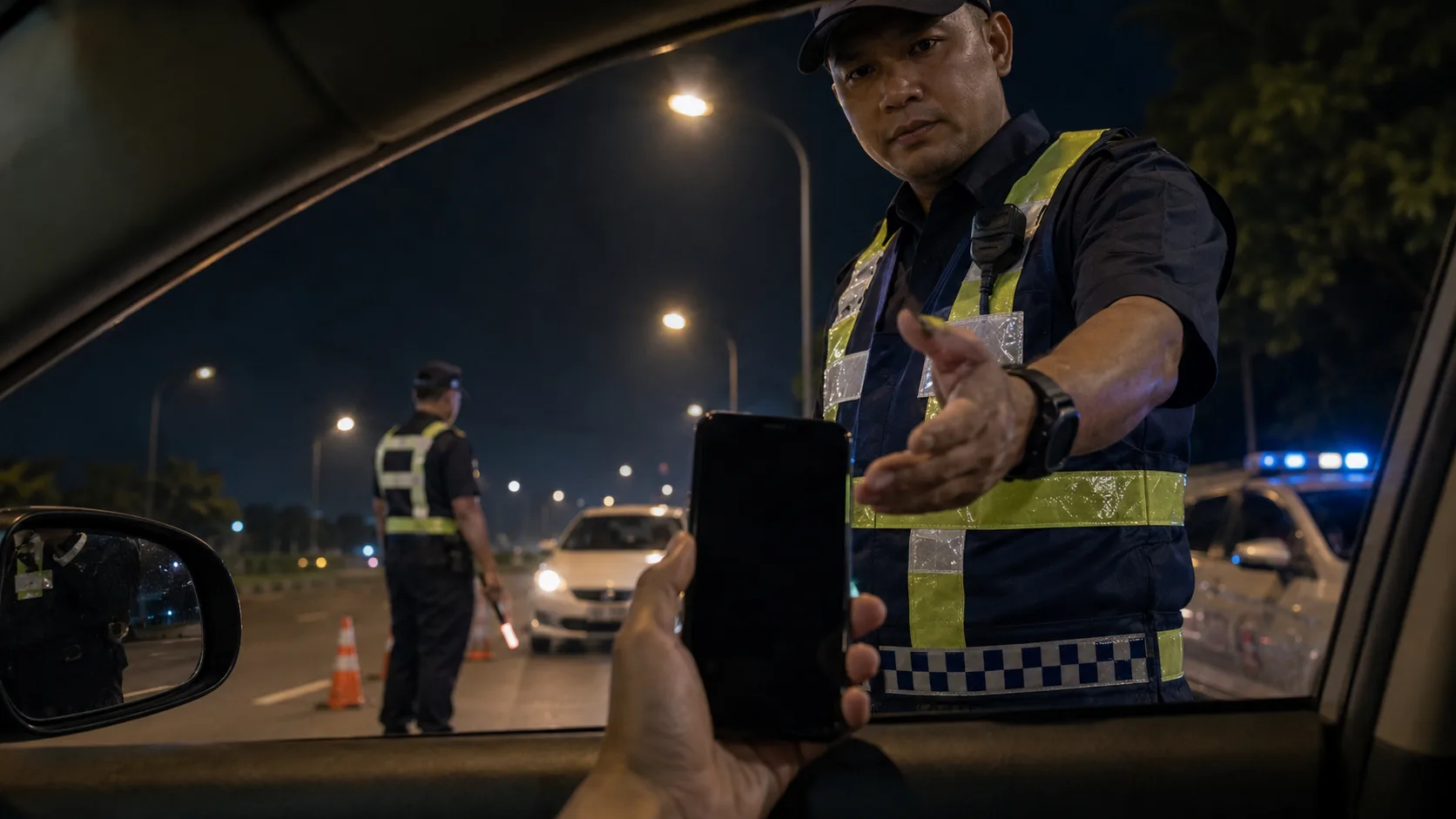
Yes, the police can check your phone in Malaysia, but they cannot do so arbitrarily or simply because you happen to be stopped at a roadblock. There must be a lawful basis connected to a search, criminal investigation, suspected offence, or arrest, and access to the phone's data under the Criminal Procedure Code generally involves an officer of at least the rank of Inspector.
A mobile phone contains far more than call records. It may hold private messages, photographs, banking information, location history, emails, documents, business records, and access to cloud accounts. This makes a phone search significantly more intrusive than checking an identity card or looking inside a vehicle.
The police do have legal powers to search for and obtain digital evidence. Those powers are broad in a proper investigation, but they are not unlimited. The key question is therefore not simply whether the police can check a phone. The real question is whether the officer has a lawful reason and is exercising a valid search or investigation power.
The police cannot conduct random phone inspections
Being stopped at a roadblock does not, by itself, give the police an unrestricted right to browse through your phone.
The Malaysian Bar's guidance states that the police may inspect a phone where there is valid and reasonable cause. This may include situations where the police suspect that you have committed an offence, are investigating you in connection with an offence, or have arrested you on suspicion of committing an offence.
SUHAKAM has also stated that mobile phone inspections at roadblocks should not be conducted arbitrarily. In January 2025, following public debate over this issue, the Inspector-General of Police clarified that phone checks would be limited to individuals suspected in specific investigations and would not be conducted randomly in public.
This distinction matters. A police officer asking to see your phone is not necessarily the same as the officer having a legal power to search its contents. You are entitled to ask why the inspection is being requested and whether you are suspected of or being investigated for an offence.
How does section 116B of the Criminal Procedure Code apply?
Section 116B of the Criminal Procedure Code deals with access to computerised data.
It provides that a police officer of at least the rank of Inspector who is conducting a search under the Criminal Procedure Code must be given access to computerised data, whether that data is stored in a computer or elsewhere. A smartphone would generally fall within the concept of a device containing computerised data.
The important qualification is that section 116B applies where the officer is already conducting a lawful search under the Criminal Procedure Code. It should not be read as a separate power allowing an Inspector to inspect any person's phone at any time without an underlying legal basis.
The underlying search may arise from a warrant, an investigation power, a lawful search connected to an arrest, or another search permitted under the Criminal Procedure Code. The legal basis for the search therefore remains important.
Section 116B also defines access broadly. It includes being provided with passwords, encryption codes, decryption codes, software, hardware, or other means needed to understand the computerised data.
This means that where the phone search itself is lawful, the police may require the access needed to inspect the relevant data. However, the existence of section 116B does not remove the need for a lawful search in the first place.
Can the police search a phone during an investigation?
The police may search for a phone or other item where it is necessary for an authorised criminal investigation and the requirements of the Criminal Procedure Code are met.
For example, section 116 allows an investigating officer to conduct or cause a search where a document or item is necessary for the investigation and there is reason to believe that the person will not produce it under an order or summons, or where it is not known who possesses it.
The court may also issue a search warrant where the legal conditions for a warrant are satisfied. In more specific situations, the law allows searches without a warrant. One example is section 116A, which concerns evidence relating to security offences or organised crime and requires reasonable grounds as well as urgency arising from the risk of delay.
These provisions show why context matters. Police powers during an active investigation are different from a casual request to inspect a person's phone without identifying any offence or investigation.
If the phone may contain evidence of an alleged scam, threatening communication, unlawful publication, financial offence, organised crime, or other offence, the police may have grounds to seize and examine it as part of the investigation.
What if the investigation involves online content?
The Communications and Multimedia Act 1998 provides additional investigation and search powers for offences under that legislation.
Under section 247, a Magistrate may issue a search warrant where there is reasonable cause to believe that an offence under the Act has been or is being committed, or that evidence needed for an investigation may be found at particular premises.
Section 248 permits a warrantless search in more urgent circumstances. A police officer of at least the rank of Inspector may exercise the search powers without first obtaining a warrant where there is reasonable cause to believe that the delay would harm the investigation or allow evidence to be tampered with, removed, damaged, or destroyed.
Where a search is lawfully conducted under those provisions, section 249 provides access to computerised data. As with section 116B of the Criminal Procedure Code, access includes the password, encryption code, decryption code, software, hardware, or other means required to understand the data.
These provisions may become relevant in investigations involving alleged unlawful online communications, social media content, network misuse, or other offences under the Communications and Multimedia Act.
Do the police always need a search warrant?
No. A warrant is an important safeguard, but Malaysian law permits certain searches without one.
A search may be carried out without a warrant where a specific statutory power allows it and the legal conditions are satisfied. This may arise where obtaining a warrant would cause harmful delay, there is a real risk that evidence will disappear, or the search is connected to another lawful power such as an arrest or an authorised criminal investigation.
The absence of a warrant does not automatically make the search unlawful. At the same time, the police should be able to identify the power they are relying on and how it relates to the investigation.
If an officer does have a search warrant, you may ask to see it and check what premises, items, or evidence it covers. You should not physically prevent the execution of a valid warrant.
What if you are arrested?
If you are lawfully arrested, the police may search you and take possession of relevant items in accordance with the Criminal Procedure Code. A phone found on an arrested person may therefore be seized, and access to its data may be sought where it is relevant to the investigation and the applicable legal requirements are met.
Arrest does not mean that every part of the phone should automatically become relevant to the investigation. The search should still be connected to a lawful investigative purpose.
If you are arrested, ask why you are being arrested and which police station you are being taken to. You should not resist physically. You should also ask to contact a family member and consult a lawyer.
The Criminal Procedure Code recognises an arrested person's right to communicate with and consult a lawyer before questioning or the recording of a statement, although this may be delayed in limited urgent circumstances permitted by law.
Must you give the police your password?
Where a lawful search is being carried out under section 116B of the Criminal Procedure Code, the meaning of access expressly includes providing the password, encryption code, decryption code, or other means needed to understand the data.
A similar provision applies under section 249 of the Communications and Multimedia Act for lawful searches conducted under sections 247 or 248.
The difficult issue is therefore usually not whether a password can ever be required. It can. The real issue is whether the police are conducting a lawful search to which the statutory access provision applies.
You should avoid assuming that every request for your password must be obeyed immediately without question. You may calmly ask the officer to explain the legal basis, the offence being investigated, whether you are under arrest, and whether there is a warrant or formal investigation.
At the same time, you should not physically obstruct an officer or destroy, delete, conceal, or alter material. Refusal in the face of a lawful search can create additional legal risk, and the correct response will depend on the circumstances.
What should you do if the police ask to check your phone?
Remain calm and do not argue aggressively. Ask the officer to show their authority card and take note of their name, rank, and service number.
You may then ask:
- Why do you need to check my phone?
- What offence is being investigated?
- Am I suspected of committing an offence?
- Am I under arrest?
- Is there a search warrant?
- Which legal power are you relying on?
- Is the officer conducting the digital search at least an Inspector?
If you are unsure, ask to contact a lawyer. You may also request that the inspection be carried out at the nearest police station rather than informally at the roadside.
Do not delete messages, reset the phone, remove applications, or attempt to interfere with evidence after becoming aware of an investigation. Even where you believe the search is unjustified, those actions may create a separate problem.
If your phone is seized, ask for the investigating officer's details, the police report or investigation reference where available, and written acknowledgment of the device taken. Record the date, time, place, officers involved, and what occurred as soon as you can.
Can you refuse a random request?
If you are not under arrest, there is no identified investigation, there is no warrant, and the officer gives no reasonable explanation for the inspection, you may calmly ask whether the request is voluntary and state that you do not consent to an arbitrary search.
You should not turn the encounter into a physical confrontation. Do not grab the device from an officer, push anyone, threaten the police, or interfere with an arrest or lawful search.
The safest practical position is to ask questions, record the officer's details, request legal advice, and ask that any inspection be conducted formally at a police station. If you believe the inspection was arbitrary or abusive, you may later seek legal advice and make a formal complaint.
A roadside disagreement is rarely the best place to resolve a disputed question of police powers.
Can the police check your messages, photographs, and applications?
Where the phone is lawfully searched, the police may access data relevant to the offence or investigation. This may include messages, emails, photographs, videos, transaction records, contact details, social media content, application data, or other digital material.
That does not mean every piece of personal information is automatically relevant. The search should be connected to its lawful purpose. A completely unrestricted search through unrelated personal, professional, financial, or confidential material may raise questions about necessity and scope.
If the phone contains legally privileged communications, highly confidential business information, or data belonging to third parties, inform your lawyer immediately. Do not assume that the existence of confidential material will automatically prevent seizure, but it may affect how the issue should be handled.
Frequently Asked Questions
Can the police check my phone at a roadblock?
The police should not conduct random or arbitrary phone inspections merely because you are stopped at a roadblock. There should be a lawful and reasonable basis connected to a suspected offence, investigation, arrest, or valid search power.
Do the police need a warrant to search my phone?
Not always. A warrant may authorise a search, but some statutory provisions permit warrantless searches where specific legal requirements are satisfied, including urgent circumstances where evidence may be lost or damaged.
Must I give the police my phone password?
If the police are conducting a lawful search under section 116B of the Criminal Procedure Code or the applicable provisions of the Communications and Multimedia Act, statutory access can include the password or other means needed to understand the data. You may still ask the officer to explain the legal basis for the search and request legal advice.
What should I do if I believe the search is unlawful?
Do not physically resist. Ask for the officer's authority card, name, rank, service number, reason for the search, and the offence being investigated. Record what happened, contact a lawyer, and consider making a formal complaint if the search appears arbitrary.
Final takeaway
The police can check a phone in Malaysia where there is a lawful basis connected to an investigation, search, suspected offence, or arrest. They do not have an unrestricted right to inspect any person's device randomly at a roadblock.
If the police ask for your phone, remain calm, ask why the search is required, identify the officers involved, clarify whether you are under arrest or investigation, and request legal advice where necessary. Do not physically resist, delete evidence, or assume that either complete compliance or complete refusal is always the correct answer without understanding the legal basis.
Speak to JPP LAW
Justin, Poh & Partners, also known as JPP LAW, assists clients with disputes, court proceedings, digital evidence, online conduct, and legal issues involving digital assets and technology in Malaysia. If you are asked to surrender or unlock a phone during an investigation and need to understand your legal position, you may contact us to discuss the matter.
Disclaimer: This article is for general information only and does not constitute legal advice. Police powers depend on the facts, the offence under investigation, and the legislation relied upon. You should seek advice based on your specific circumstances.
Your next step
Have a question about your own matter?
Speak directly with a partner about your situation. We will help you understand where you stand and what your options are, with no obligation.
Speak to a PartnerMore in General
Do I Need a Will in Malaysia? What Happens If You Don't
Do you need a will in Malaysia? Learn what happens if you die without one, who inherits your assets, why an executor matters and when to make one.
Read→What Is Probate in Malaysia and Why Is It Needed?
What is probate in Malaysia? Learn when a Grant of Probate is needed, what an executor does and how it differs from Letters of Administration.
Read→Can My Landlord Forfeit My Rental Deposit in Malaysia?
Can a landlord keep your rental deposit in Malaysia? Learn when a deposit may be forfeited, what deductions are allowed and how to demand a refund.
Read→